The queue might be the most underleveraged space in experience design
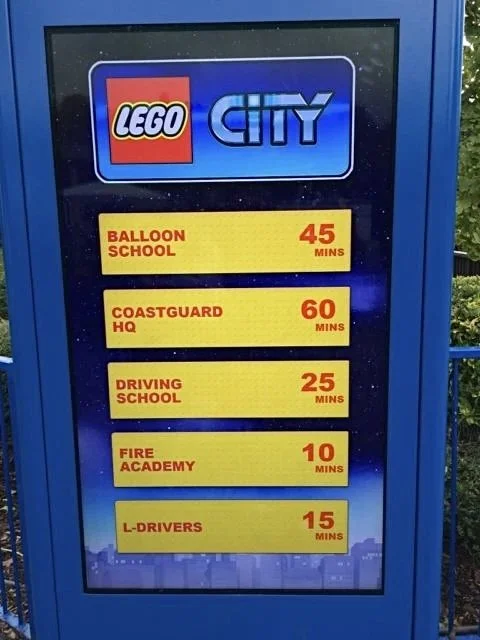
This is not a new observation for me. Months ago, I stood in a 90-minute queue outside the Dalston Curve Garden pumpkin festival and found myself thinking the same thing. Last weekend, it was LEGOLAND Windsor Resort — 20 to 45 minutes per ride, family after family in largely inert corridors. And just yesterday, passing KOKO in Camden, I watched a long snake of music fans waiting patiently outside, most of them heads down in their phones.
Three very different experiences. Three very different audiences. The same missed opportunity.
Dwell time is not dead time. It is design real estate — and in most cases, we are leaving it blank.
Waiting is a threshold. And thresholds are powerful.
The queue is often your single best moment to:
→ Build anticipation and deepen the narrative before the main event
→ Onboard your audience into what is about to happen
→ Create genuine connection — between strangers, between friends, between parents and children
→ Capture value at the exact moment excitement peaks
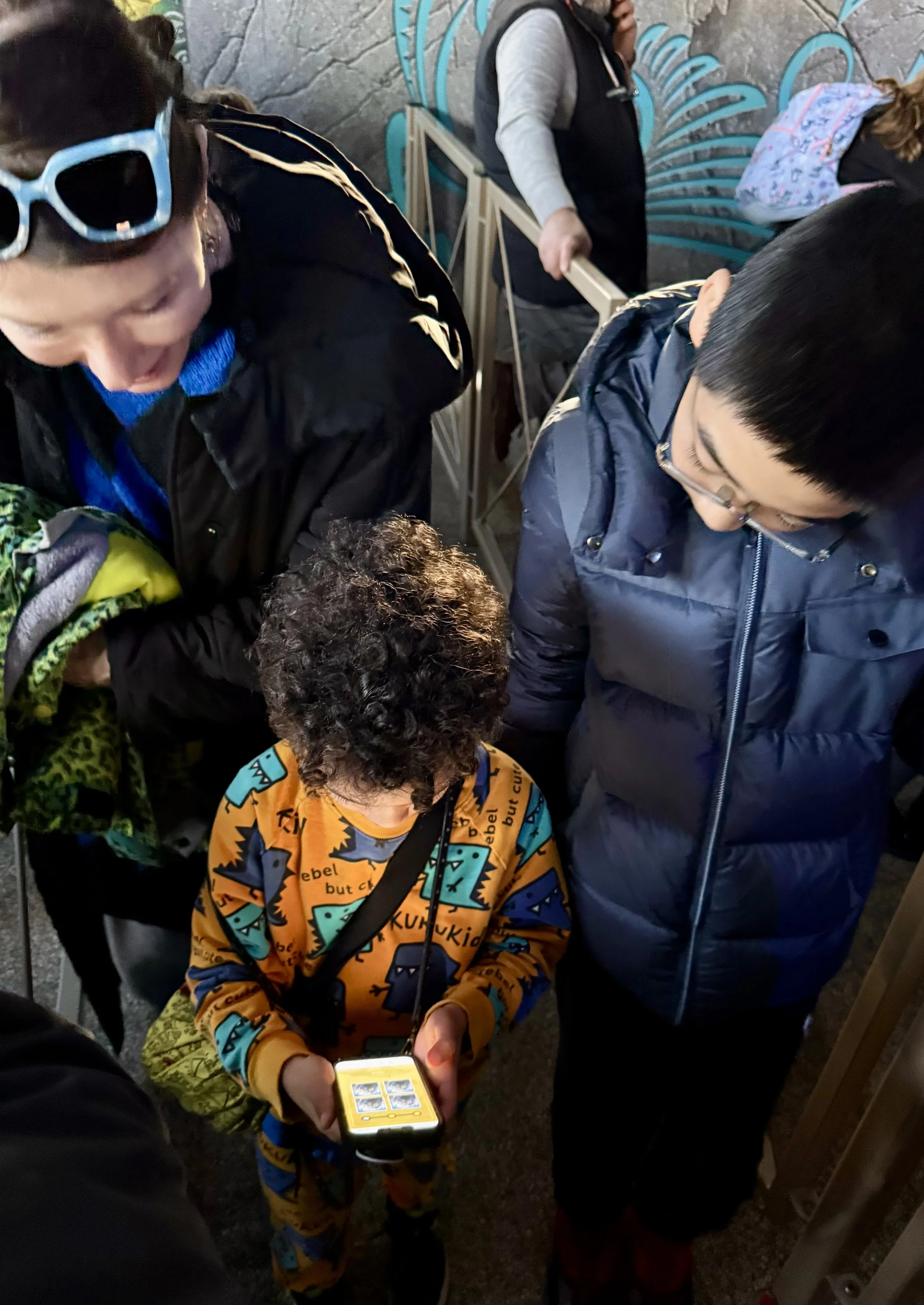
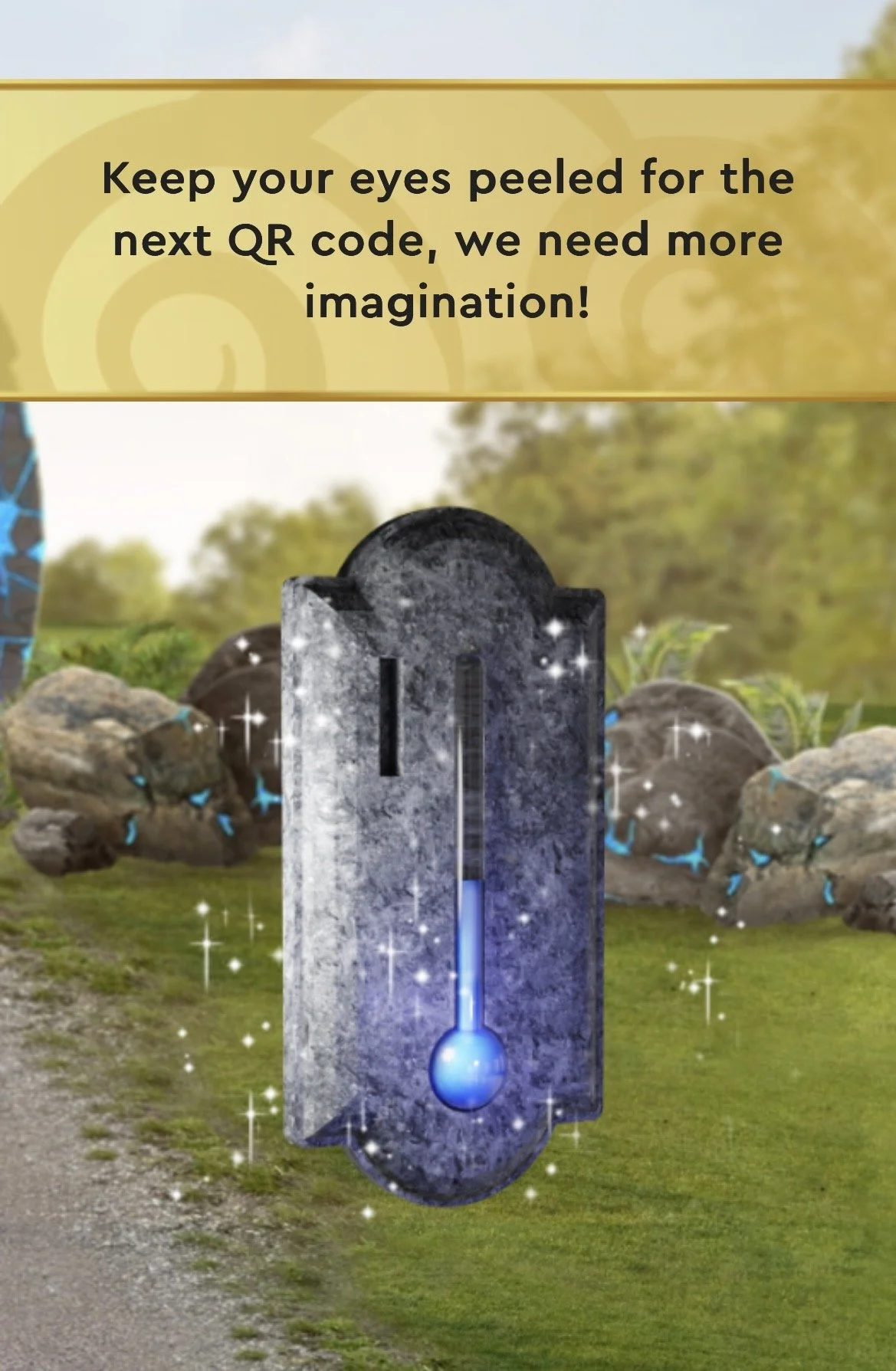
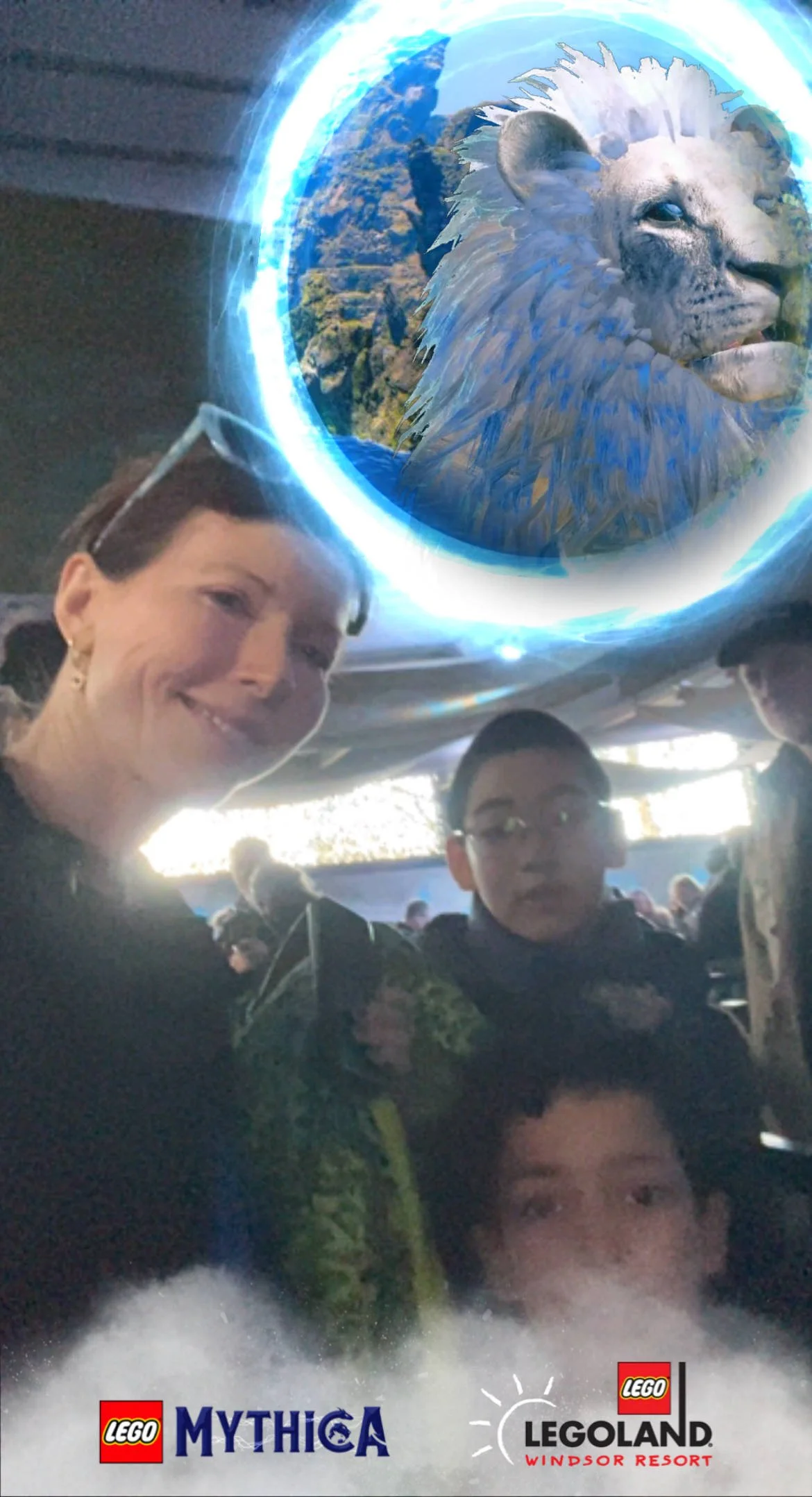
I want to focus on LEGOLAND because it is already doing some of this beautifully. The Flight of the Sky Lion showed what is possible. AR games and browser-based challenges activated the queue so effectively that a 40-minute wait genuinely felt lighter. It was smart. It worked.
But it also revealed something bigger.
Most queue design today focuses on distraction — how do we make the wait feel shorter?
A more interesting question is: how do we make the wait meaningful?
Keeping children entertained meant handing them a phone. For many parents, that can sit uncomfortably. So the real design challenge becomes: how do you create the same magic — immersive, narrative-driven, genuinely fun — in a way that is communal, mixed physical and digital, rather than each child disappearing into their own screen?
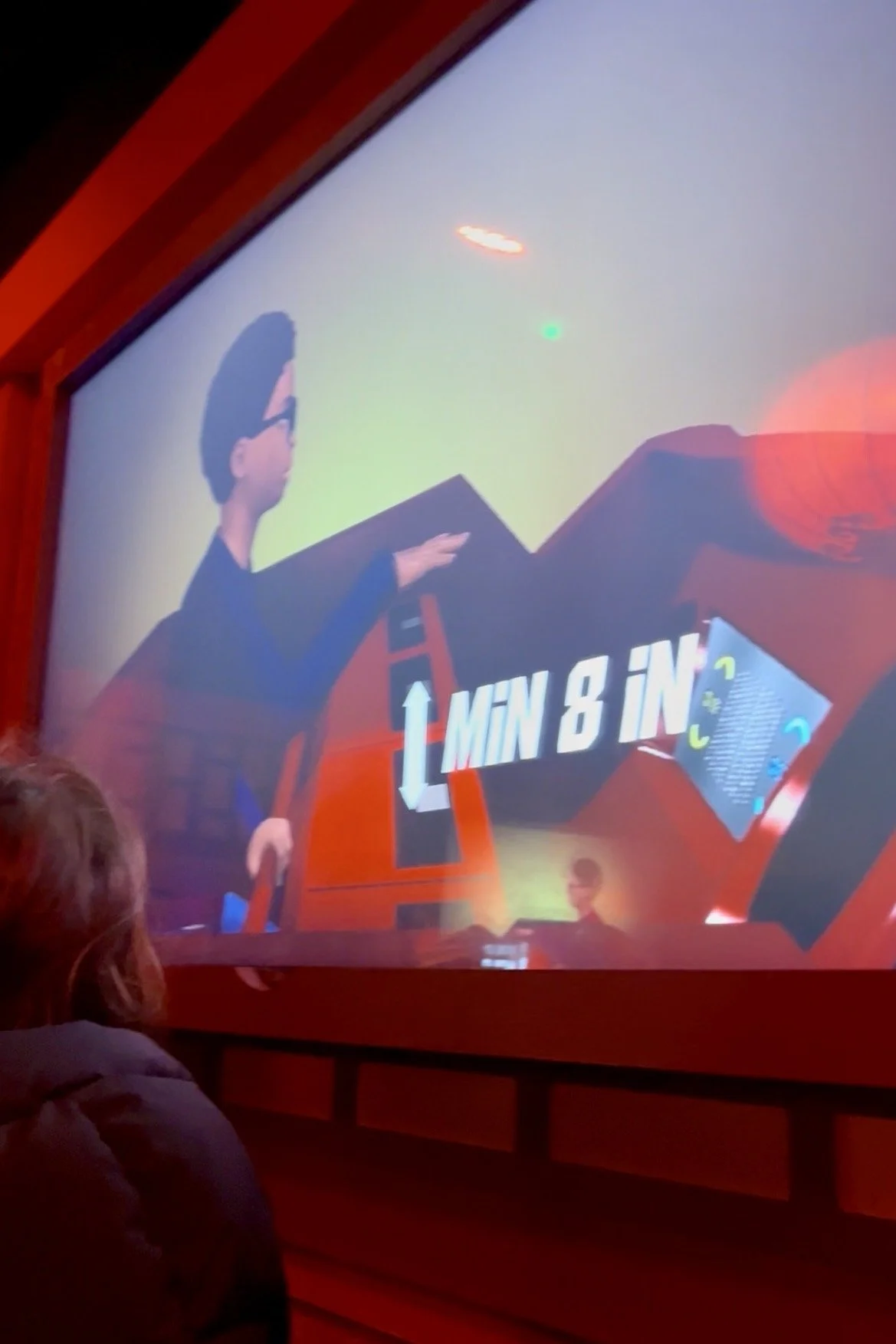
The Ninjago ride takes a step in the right direction by bringing onboarding content into the queue itself rather than isolating it in a separate holding room. Better. But still largely passive — screens explaining mechanics you are about to use
What struck me was that the park has already created the physical alternative.
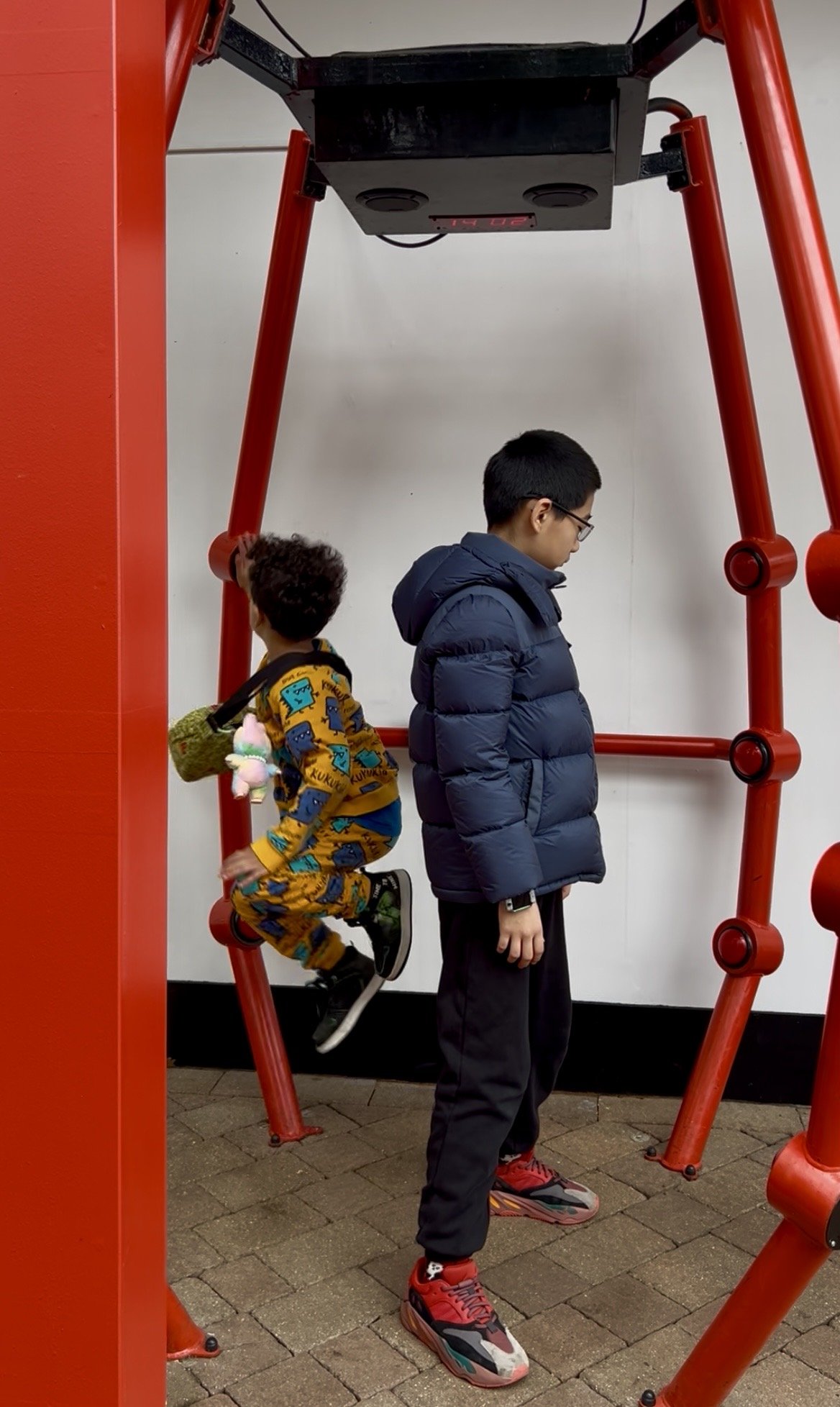
After the ride, tucked away on a side wall outside the building, we found a reflex station: lit buttons, speed settings, movement challenges. It was simple, tactile and competitive — and instantly became one of the boys’ favourite moments in the park.
Imagine if that was in the queue.
If the actual arm mechanics of the ride were embedded in your body before you ever sat down. You would not just understand what to do. You would feel ready for it. You would arrive already in the game.
We did find one screen-free queue activity: a simple Lego building station. Genuinely effective and completely on-brand. Low tech. High impact. I wish more rides offered them.
That made me think about what if the park placed animated Miniland-style models of each ride’s world throughout its queues? Intricate. Detailed. Full of things to find. Some rides already include Lego figures dotted along the line, but they are single static characters. There is something magical about an entire scene coming to life in Lego — the kind of thing that makes you lean in, nudge someone next to you, and point something out.
And you can add a simple play layer — a spot-the-detail scavenger hunt logged in the app — and suddenly the wait becomes playful.
Minifigure Speedway was probably the longest queue we stood in — and well worth it for the ride itself. But for a ride built entirely around competition, the queue did nothing to build that competitive spirit. A few posters and scattered characters lined the route, but it felt sparse and left us unclear about the teams. No side-choosing. No allegiance. No build-up of rivalry.
Imagine if the queue was where you committed.
Choose your team before you even approach the platform. Pick a colour. Declare your side. Build anticipation as you move forward. So that when you finally split across the two rollercoasters to race each other, it actually means something.
Instead, the option to race each other did not exist at all, which was the first thing we instinctively wanted to do. By the time you sat down, the theme had faded. It was a fun rollercoaster. But it could have been a story about rivalry.
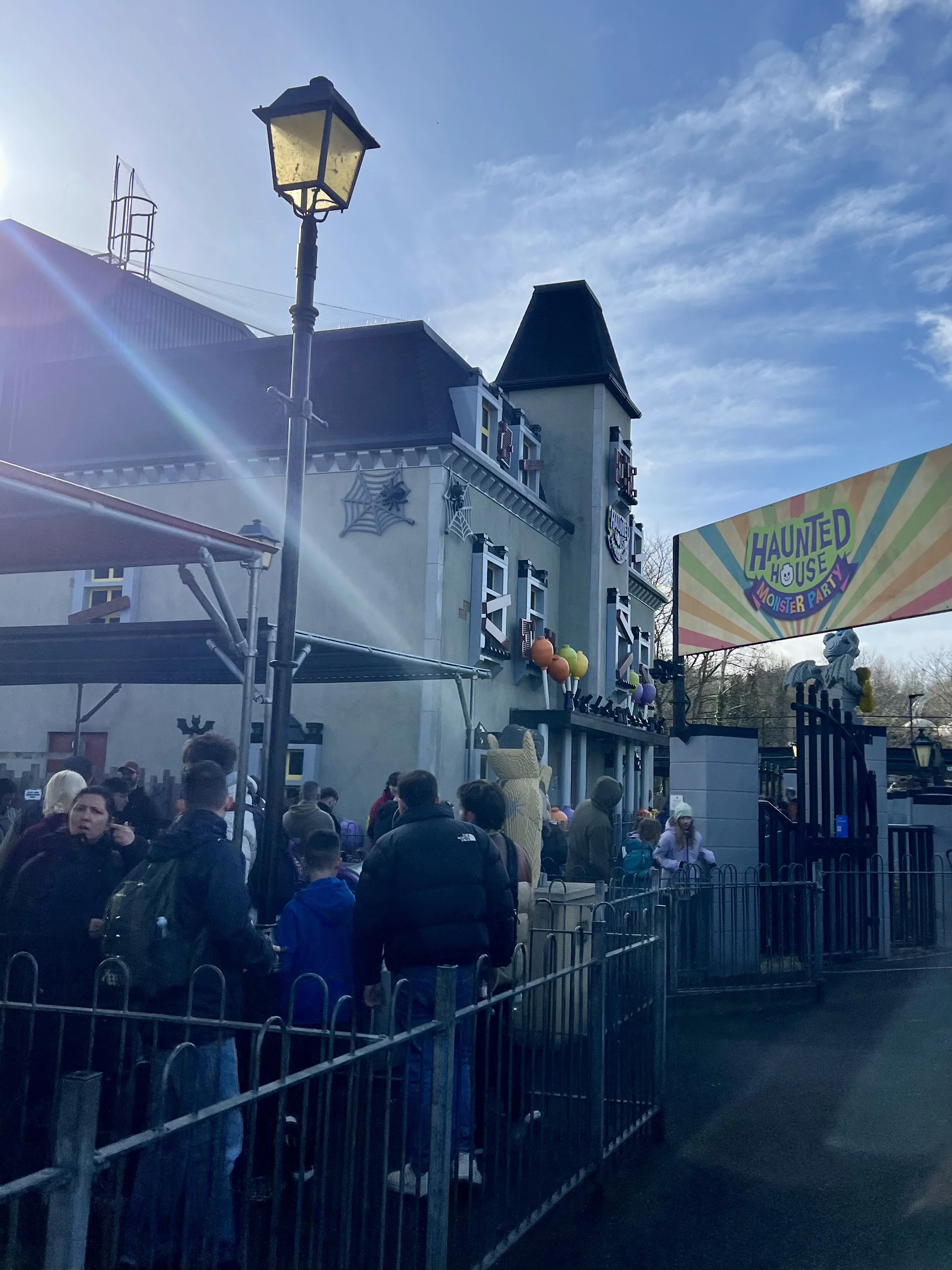
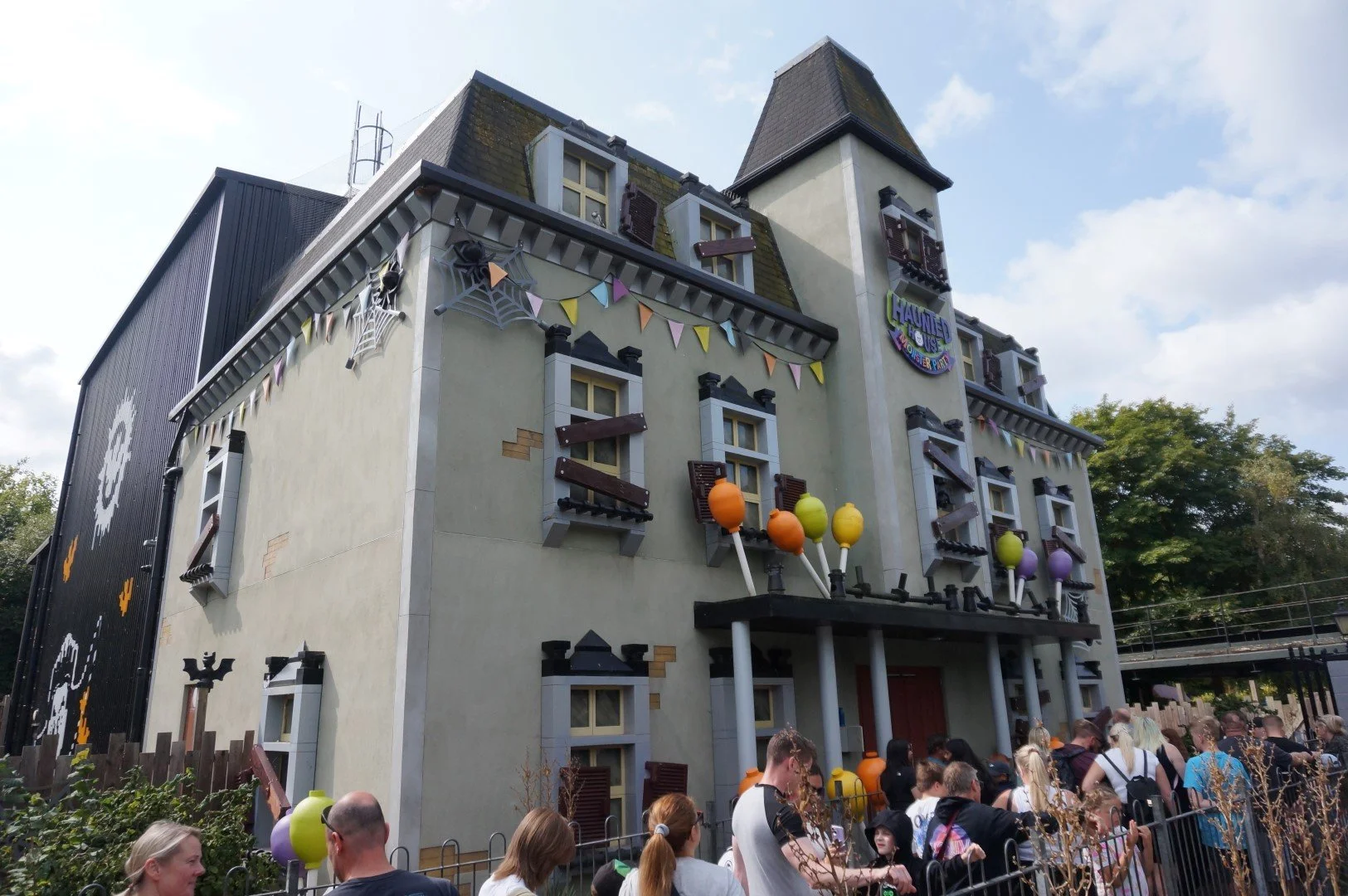
The Haunted House Monster Party queue was another missed opportunity. Families shuffled past a barely-dressed facade, then were shepherded into lightly decorated staircases and a separate onboarding room inside. But what if the queue itself was the beginning of the haunted house? Spider webs. Subtle sounds. The backstory unfolding as you move forward. Mood gathering with every step. So the ride becomes a climax, not a starting point.
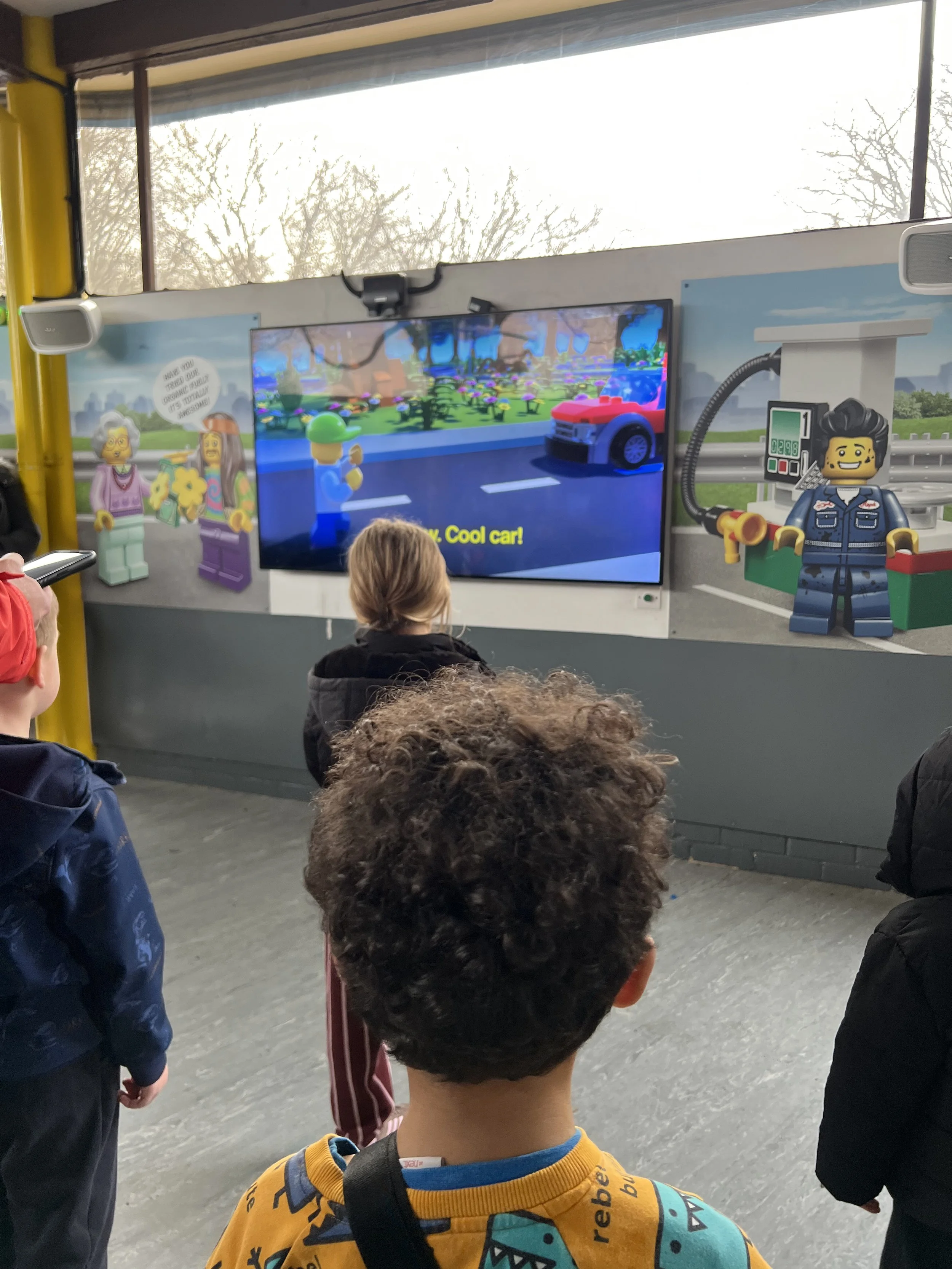
At the LEGO City Driving School, children watch a rather long instructional video at the end of the line. It is cute and fine — but children that age learn by doing. What if the queue taught them instead? A traffic light prompting them to press the button only on green. A fork marked “one way” that dead-ends and sends you back a few steps. The rules of the road embodied through play before you ever sit in the car.
Also, why not bring merchandise to where guests already are? While the exit through the gift shop is valuable, queues are where anticipation peaks and guests have the most unstructured time. In a theme park, wait times mean guests rush from one ride straight into the next queue, leaving little time to browse along the way.
Imagine Legoland employees in character walking the line with fold-out trays of ride-specific merchandise. Or open alcoves along the queue with vending-style access, designed so you can grab something and step straight back into line. Peak excitement, perfectly timed.
This same thought struck me at the pumpkin festival, where many stepped out of their group to run to the nearby shop for refreshments during the long wait. What if someone had walked the queue with Halloween treats and taken orders for the cafe inside to be brought to you while you waited? The crowd was captive and willing — and the garden was fundraising.
That is not a cost. It is a conversion.
And at KOKO, watching fans wait outside, it was easy to imagine anticipation being amplified rather than endured. Outdoor screens for crowd karaoke before the doors open. A quick glam station. Drinks circulating. You would not just be waiting. You would already be at the gig.
The queue is not dead time. It is the threshold — and thresholds shape everything that follows. The way you enter an experience changes how you feel it.
We spend enormous energy designing the hero moment.
It's time to treat the queue as Act One.
